
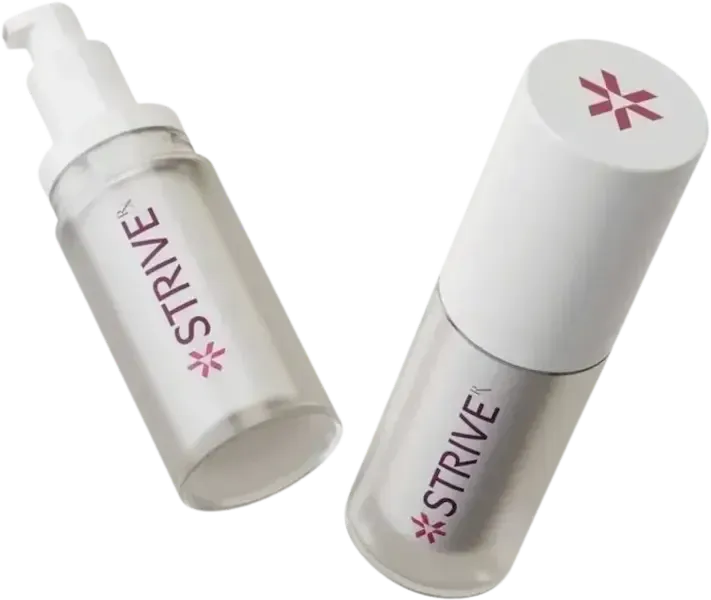
collagen + hydration
Youthful Cream
4-in-1-night cream that addresses both sides of perimenopausal skin aging: estrogenic decline and androgenic excess.
No Insurance Required
Ships From USA Pharmacy
Free Medical Consultation
No Subscription Required
Licensed Provider
Licensed Pharmacy
HIPAA Compliant
LegitScript Certified
Overview
Estriol + Finasteride
Niacinamide + Tretinoin
Estriol restores estrogenic collagen and hydration support, finasteride blocks DHT to reduce unwanted facial hair and pore enlargement, tretinoin drives collagen synthesis and cell turnover, and niacinamide reinforces the barrier and reduces retinoid irritation.
Mechanism of Action
Estriol restores estrogen-driven procollagen and hyaluronic acid production. Finasteride blocks DHT locally at facial follicles and sebaceous glands without systemic hormonal suppression. Tretinoin drives collagen synthesis and cell turnover via retinoic acid receptor signaling. Niacinamide reinforces the skin barrier, blocks pigment transfer, and reduces retinoid irritation.
Topical Cream
Applied once nightly to face and neck after cleansing and fully drying. Apply a pea-sized amount in a thin even layer. Start every other night for 1-2 weeks, advance to nightly. Avoid the eye area.
Information presented here is for educational purposes only and not intended to replace or substitute guidance from a healthcare provider. Compounded medications are not FDA-approved nor evaluated by the FDA for safety, efficacy, or quality.
Benefits
Facial Hair Reduction
Reduces unwanted terminal facial hair in androgen-sensitive zones by blocking DHT at the follicular level without systemic antiandrogen effects.
Collagen Rebuilding
Rebuilds collagen, restores skin thickness, and reduces fine lines through estrogenic and retinoid-driven structural renewal.
Inflammation Control
Niacinamide suppresses inflammatory cytokines and buffers the retinoid adjustment response for more consistent nightly use.
Cell Renewal
Tretinoin accelerates surface cell renewal while estriol restores estrogen-depleted skin thinning and dryness, supporting structural repair with every application.
Dual Hormone Balance
The only formula in the line that addresses both estrogen loss and androgen excess, the two hormonal drivers of perimenopausal skin aging, simultaneously.
Individual results may vary. Benefits described are based on clinical and pharmacological evidence and do not constitute a guarantee of treatment outcomes. All treatment requires evaluation and approval by a licensed provider.
Simple. Medical. Personalized.

Medical intake
Answer a few online questions about your health history, lifestyle, & goals. No clinic visits required.
Provider evaluation
A licensed medical provider reviews your intake to determine the safest, personalized treatment.

Personalized plan
Custom treatment plan built around your unique health needs, goals, medical history, & biology.

Ongoing support
Stay connected with your care team for follow-ups, adjustments, & expert answers 100% online.
What Patients Are Experiencing

"The chin hair improvement was the first thing I noticed. By month three my skin texture and firmness had both visibly improved as well."
— Lorraine M.*
"I did not realize how much the androgen shift was affecting my skin until my provider explained it. This formula addressed exactly that."
— Wendy B.*
"Perimenopausal skin changes hit fast. Youthful Cream is the first product that has actually reversed some of them."
— Joanna S.*
*Individual experiences may vary. Not all patients will have the same outcomes.
FAQs
What is Youthful Cream?
Youthful Cream is a prescription therapy used for skin hydration and firmness support.
Who should use Youthful Cream?
Patients seeking support for skin hydration and firmness support may qualify after evaluation by a licensed provider.
Does Youthful Cream require a prescription?
Yes. Youthful Cream is a compounded prescription topical medication containing tretinoin (teratogenic retinoid), estriol (topical estrogen), and finasteride (5-alpha reductase inhibitor), all of which require a valid prescription from a licensed healthcare provider. A telehealth consultation, full medical intake, and thorough patient counseling are required before dispensing.
What are the possible side effects?
Tretinoin-related adjustment effects during the initial 2 to 4 weeks include redness, peeling, and dryness, meaningfully reduced by niacinamide's tolerability buffering. Increased UV sensitivity requires mandatory daily SPF. Estriol may rarely cause mild systemic estrogenic effects (breast tenderness) with significant absorption. Topical finasteride at facial compounding concentrations is not expected to cause the sexual side effects associated with systemic oral finasteride in men; however, any unexpected hormonal symptoms should be reported to your provider. Wash hands thoroughly after application; finasteride can be absorbed through the skin of others who handle the product.
Who should not use Youthful Cream?
Absolutely contraindicated in pregnancy and in women who may become pregnant, both tretinoin and finasteride are teratogenic; this product must never be handled by pregnant women. Reliable contraception is required throughout treatment. Not appropriate during breastfeeding. Patients with a personal history of hormone-sensitive malignancies (estrogen receptor-positive breast or endometrial cancer, hormone-sensitive prostate conditions) must discuss use with their oncologist before initiating. Known retinoid, finasteride, estriol, or niacinamide hypersensitivities are contraindications. Do not apply to actively inflamed, sunburned, or eczematous skin.
Are there any drug interactions?
Other topical retinoids must not be combined: doing so increases irritation dramatically. Benzoyl peroxide inactivates tretinoin on direct contact. AHAs and BHAs increase barrier disruption during the retinoid adjustment period. Patients on systemic menopausal HRT, oral contraceptives, or systemic finasteride or dutasteride should ensure all providers are aware of the estriol and finasteride components of this formula. High-dose zinc supplementation or copper-chelating topicals should be discussed with your provider. Photosensitizing medications require vigilant daily SPF adherence.
Is Youthful Cream safe if I have a pre-existing medical condition?
Patients with a history of hormone-sensitive malignancy, including estrogen receptor-positive breast cancer, endometrial cancer, or hormone-sensitive prostate conditions, must obtain oncological clearance before initiating. Active inflammatory skin conditions must be stable before beginning therapy. Patients with known coagulation disorders should discuss finasteride's androgen-modulating activity with their provider. Regular provider follow-up is standard of care throughout treatment. Your provider will conduct a thorough medical and dermatological review before prescribing.
Contact Us
Start Your Journey
Ready to Address Perimenopausal Skin Aging at Its Source?
Physician-prescribed. Delivered to your door. No clinic visits required.
Licensed Provider
Licensed Pharmacy
HIPAA Compliant
LegitScript Certified

© 2026 TestosteroneShots.com, PC
text (323)-283-9219
638 1/2 N. Robertson Blvd, West Hollywood, CA 90069
Legal

The information and clinical services described on this website are for educational and informational purposes only and are not intended to diagnose, treat, cure, or prevent any disease. All treatments require evaluation and approval by a licensed healthcare provider through a telemedicine consultation. Treatment approval is not guaranteed. Individual results may vary, and treatments may carry risks and side effects. Certain compounded medications, wellness treatments, or off-label uses may not be evaluated by the U.S. Food and Drug Administration (FDA) for safety, effectiveness, or quality unless explicitly stated. Testosterone Shots provides telehealth consultations, clinical review, care coordination, lab-related services, membership services, and ongoing treatment management. Testosterone Shots is not a pharmacy and does not manufacture, compound, dispense, sell, handle, warehouse, ship, or collect payment for prescription medication. Testosterone Shots collects payment only for consultations, clinical review, care coordination, lab-related services, membership services, and other non-pharmacy services. If treatment is approved, your prescription may be sent to a licensed pharmacy partner. The pharmacy contacts you directly to complete medication payment and shipping. Services are provided by licensed physicians, nurse practitioners, and/or other licensed healthcare providers in states where they are authorized to practice. This service is not intended for medical emergencies. If you are experiencing an emergency, call 911 or seek immediate medical care. We take reasonable measures to protect personal health information in accordance with applicable privacy laws, including HIPAA. By using this website or its services, you agree to our Terms of Service, Privacy Policy, Notice of Privacy Practices, Telehealth Consent, and Important Safety Information. You must be 18 years of age or older to use this service.