
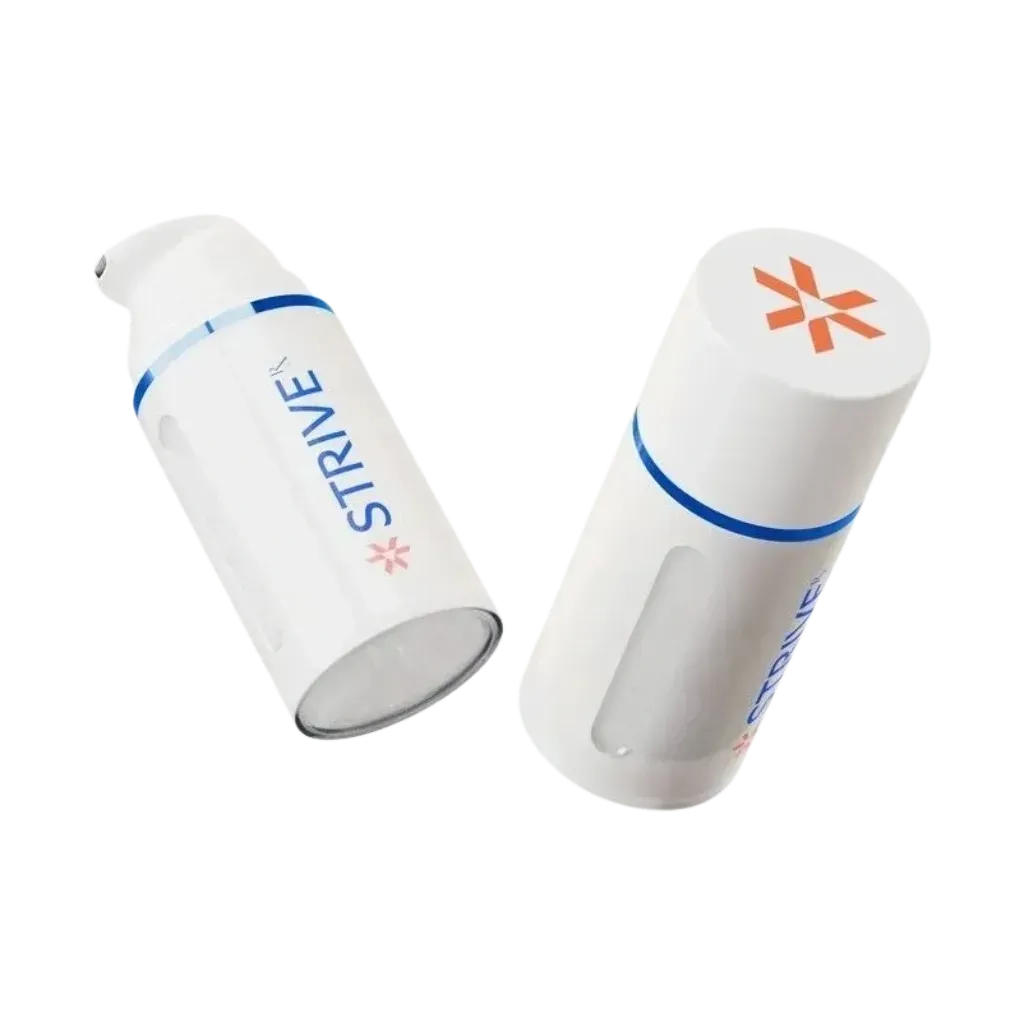
Rosacea
A prescription-only topical formula designed to soothe rosacea symptoms by reducing redness, inflammation, and irritation while restoring balance to reactive skin. Calms flare-ups, controls bacteria and mites, and improves skin texture for a more even, resilient complexion.
Overview
Rosacea is a prescription-only, multi-active compounded cream formulated to address the root causes of rosacea rather than simply masking its appearance. Rosacea is a complex, chronic inflammatory skin condition with multiple contributing mechanisms — dysregulated immune response, vascular hyperreactivity, Demodex mite overpopulation, microbial imbalance, and compromised barrier function. This formula targets each.
Azelaic Acid reduces redness and normalizes skin texture. Ivermectin eliminates Demodex mites — a clinically recognized contributor to papulopustular rosacea. Metronidazole provides anti-inflammatory and antimicrobial action. Niacinamide strengthens the skin barrier, calms flushing, and improves overall tolerance. Together, they form a gentle yet clinically comprehensive approach to long-term rosacea control.
Active Ingredients
Azelaic Acid
Anti-inflammatory · Keratolytic · Antioxidant
Azelaic Acid is one of the few agents clinically proven to reduce rosacea-associated redness and papules. It inhibits the production of reactive oxygen species in keratinocytes, reduces abnormal keratinization, suppresses the kallikrein-5 serine protease implicated in rosacea pathophysiology, and has direct anti-inflammatory activity on neutrophils. It is well-tolerated on sensitive skin and suitable for twice-daily use without the irritation potential of retinoids.
Ivermectin
Antiparasitic · Anti-inflammatory
Ivermectin is the only topical antiparasitic approved specifically for papulopustular rosacea. It kills Demodex folliculorum mites — which are found in significantly elevated densities on rosacea-affected skin and trigger an inflammatory response through their waste products and death-related bacterial release. Ivermectin also has intrinsic anti-inflammatory properties, inhibiting the innate immune activation that Demodex colonization drives.
Metronidazole
Nitroimidazole Antibiotic · Free Radical Scavenger
A cornerstone of rosacea treatment for decades, Metronidazole reduces papules, pustules, and erythema through dual action: antimicrobial activity against anaerobic organisms contributing to skin dysbiosis, and antioxidant activity that neutralizes the reactive oxygen species driving vascular inflammation. It is particularly effective at reducing the persistent diffuse redness that characterizes erythematotelangiectatic rosacea.
Niacinamide
Vitamin B3 · Barrier Restorer · Anti-flushing
Rosacea-prone skin is characterized by a compromised epidermal barrier that allows increased transepidermal water loss and heightened sensitivity to environmental triggers. Niacinamide strengthens this barrier by stimulating ceramide and fatty acid synthesis, reduces the flushing response by modulating vasodilatory pathways, calms inflammatory redness, and improves overall skin resilience — making it a foundational ingredient for long-term rosacea management and improved tolerance of the other actives.
How to Use
Usual Directions
Cleanse gently
Use a mild, fragrance-free cleanser with lukewarm water. Avoid scrubbing or rubbing — pat skin dry with a soft cloth. Hot water is a trigger; always use lukewarm.
Wait until skin is fully dry
Unlike some actives, Rosacea should be applied to completely dry skin to minimize transient tingling or flushing, particularly during the adjustment phase.
Apply a thin, even layer
Apply a pea-sized amount across the entire affected area — cheeks, nose, chin, and forehead as directed. Gently smooth in; do not rub vigorously. Avoid the eye area.
Follow with mineral SPF (morning)
If using in the morning, follow with a mineral SPF 30+ — the most important step for rosacea patients. In the evening, a gentle non-comedogenic moisturizer may be applied on top.
What to Expect
❌Harsh actives: Avoid retinoids, AHAs, BHAs, benzoyl peroxide, vitamin C serums, and physical exfoliants while using this formula unless your provider specifically approves them.
❌Fragranced products: Fragrance is one of the most common skin irritants for rosacea patients. Avoid all fragranced skincare, cleansers, and toners.
❌Rubbing or scrubbing: Mechanical irritation — from washcloths, scrubs, or vigorous rubbing — disrupts the compromised barrier and worsens flushing. Always use gentle, patting motions.
❌Skipping SPF: UV exposure directly triggers rosacea flares and undoes the formula's anti-inflammatory work. Mineral SPF is non-negotiable on rosacea-prone skin.
❌Inconsistent use: Rosacea is a chronic condition. Stopping treatment when skin looks clear often leads to rapid relapse. Maintain consistent use as directed by your provider.
Simple. Medical. Personalized.

Medical intake
Answer a few online questions about your health history, lifestyle, and goals — no clinic visits required.
Provider evaluation
A licensed medical professional reviews your intake and determines the safest, most effective option for you.

Personalized plan
Custom treatment plan built around your unique health needs, goals, medical history, and biology.

Ongoing support
Stay connected with your care team for follow-ups, adjustments, and expert answers — all online.
FAQs
What role do Demodex mites play in rosacea, and how does Ivermectin help?
Demodex folliculorum mites naturally inhabit hair follicles on the human face. In rosacea patients, Demodex populations are significantly elevated compared to unaffected individuals. As these mites die, they release bacteria and inflammatory byproducts directly into the follicle, triggering an immune response that manifests as redness, papules, and pustules — particularly in papulopustular rosacea. Ivermectin paralyzes and kills Demodex mites through a mechanism targeting invertebrate neuromuscular function, making it the most targeted treatment for Demodex-associated rosacea available.
Is this formula safe for very sensitive or reactive skin?
Yes — Rosacea is specifically formulated for rosacea-prone, sensitive skin. All four actives in this formula have established tolerability profiles on reactive skin, and Niacinamide is included specifically to buffer irritation and support barrier function. That said, some patients experience mild transient tingling or temporary redness in the first 1–2 weeks as skin adjusts, particularly with Azelaic Acid. These effects typically resolve with continued use. If you have reactive skin, apply to completely dry skin and start with once-daily use before progressing to twice daily as tolerated.
How is this different from over-the-counter rosacea products?
Most over-the-counter rosacea products address surface-level symptoms — redness-reducing ingredients, Rosacea, or green-tinted primers. They do not target the underlying pathophysiology. Rosacea includes Ivermectin (a prescription-only antiparasitic targeting Demodex), Metronidazole (a prescription antimicrobial and anti-inflammatory), and pharmaceutical-grade Azelaic Acid — all of which require a prescription because of their clinical potency and specificity. This is a medical treatment, not a cosmetic one.
How long before I see results?
Many patients notice reduced redness and less frequent flare-ups within 4–6 weeks of consistent use. Papules and pustules typically respond within 8–12 weeks as Demodex populations are reduced and inflammation is suppressed. Barrier strengthening from Niacinamide, and overall skin resilience, improves gradually over 3–6 months. Because rosacea is a chronic condition, results are cumulative — and consistency of use is far more important than speed of application.
Can I use Rosacea along-term, or is it only for flare-ups?
Rosacea is designed for both active flare management and ongoing maintenance. Rosacea is a chronic condition — for most patients, complete discontinuation leads to relapse. Your provider will evaluate your response over 12+ weeks and recommend an appropriate maintenance protocol, which may involve reduced application frequency. Metronidazole and Azelaic Acid in particular have well-documented long-term safety profiles when used as directed under provider supervision.
© 2026, TestosteroneShots.com PC
text (323)-283-9219
638 1/2 N Robertson Blvd, West Hollywood, CA 90069
Legal

The information and products provided on this website are for educational and wellness purposes only and are not intended to diagnose, treat, cure, or prevent any disease. All treatments require evaluation and approval by a licensed healthcare provider through a telemedicine consultation. Individual results may vary, and products carry potential risks and side effects. Certain products may not be evaluated by the U.S. Food and Drug Administration (FDA) unless explicitly stated. Services are provided by licensed physicians and nurse practitioners in states where they are authorized to practice, including California, Florida, Nevada, and other participating states. This service is not intended for medical emergencies. If you are experiencing an emergency, call 911 or seek immediate medical care. We take reasonable measures to protect personal health information in accordance with applicable privacy laws, including HIPAA. By using this website or its services, you agree to our Terms of Service, Privacy Policy, and Telehealth Consent. You must be 18 years of age or older to use this service.


