
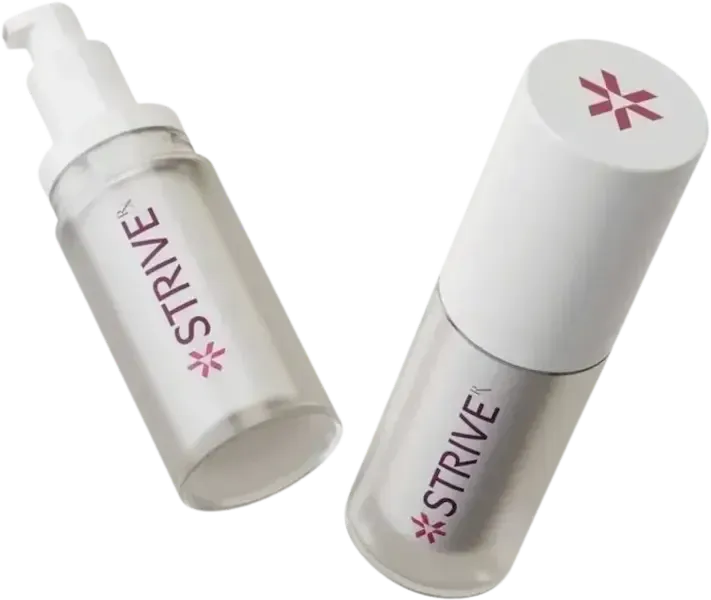
Anti-Inflammatory + collagen
Puffy Eye Cream
4-in-1 eye cream that reduces puffiness, dark circles, fine lines, and crepiness in the under-eye area.
No Insurance Required
Ships From USA Pharmacy
Free Medical Consultation
No Subscription Required
Licensed Provider
Licensed Pharmacy
HIPAA Compliant
LegitScript Certified
Overview
Caffeine + Triamcinolone
Tretinoin + Glycolic Acid
Four actives targeting the four primary under-eye concerns in one formula: vascular puffiness (caffeine), inflammatory edema (triamcinolone), collagen loss and dark circles (tretinoin), and surface texture (glycolic acid). Triamcinolone also buffers retinoid and AHA irritation in the sensitive periorbital zone.
Mechanism of Action
Caffeine vasoconstricts periorbital capillaries to reduce puffiness. Triamcinolone suppresses inflammatory cytokines and vascular permeability to address edematous swelling. Tretinoin stimulates collagen and normalizes melanocyte activity. Glycolic acid exfoliates dead surface cells and stimulates collagen at the dermal-epidermal junction.
Topical Application
Apply to the under-eye area nightly as directed by your provider. Sun protection required during daytime.
Information presented here is for educational purposes only and not intended to replace or substitute guidance from a healthcare provider. Compounded medications are not FDA-approved nor evaluated by the FDA for safety, efficacy, or quality.
Benefits
Collagen Rebuilding
Dual collagen stimulation from tretinoin and glycolic acid rebuilds under-eye skin structure while glycolic acid resurfaces dull pigmented surface cells.
Puffiness Reduction
Dual anti-puffiness coverage from caffeine (vascular) and triamcinolone (inflammatory) addresses both primary sources of under-eye swelling.
Dark Circle Correction
Triple dark circle correction targeting vascular hemoglobin pooling (caffeine), epidermal melanin (tretinoin), and surface cell accumulation (glycolic acid).
Prescription-Grade Results
Clinically comprehensive under-eye treatment that over-the-counter products cannot replicate with prescription-strength active concentrations.
Individual results may vary. Benefits described are based on clinical and pharmacological evidence and do not constitute a guarantee of treatment outcomes. All treatment requires evaluation and approval by a licensed provider.
Simple. Medical. Personalized.

Medical intake
Answer a few online questions about your health history, lifestyle, & goals. No clinic visits required.
Provider evaluation
A licensed medical provider reviews your intake to determine the safest, personalized treatment.


Personalized plan
Custom treatment plan built around your unique health needs, goals, medical history, & biology.

Ongoing support
Stay connected with your care team for follow-ups, adjustments, & expert answers 100% online.
What Patients Are Experiencing

"The puffiness reduction was visible within a week. The dark circles took longer but are genuinely fading at month two."
— Jess W. *
"I have tried every eye cream on the market. This is the only one that has actually made a visible structural difference."
— Theresa B.*
"Under-eye crepiness has been my biggest concern. The combination of tretinoin and glycolic acid is addressing it in a way nothing else has."
— Gina M.*
*Individual experiences may vary. Not all patients will have the same outcomes.
FAQs
What is Puffy Eye Cream?
Puffy Eye Cream is a prescription therapy used for under eye appearance support.
Who should use Puffy Eye Cream?
Patients seeking support for under eye appearance support may qualify after evaluation by a licensed provider.
Does Puffy Eye Cream require a prescription?
Yes. Puffy Eye Cream is a compounded prescription topical medication containing triamcinolone acetonide (a topical corticosteroid) and tretinoin (a teratogenic retinoid), both of which require a valid prescription from a licensed healthcare provider. A telehealth consultation, full medical intake, and thorough patient counseling are required before dispensing.
What are the possible side effects?
Tretinoin and glycolic acid may cause mild stinging, tingling, or warmth on initial application in patients new to periorbital retinoid or AHA use; this typically resolves with continued use. Mild redness or peeling during the adjustment period may occur. Increased periorbital photosensitivity requires mandatory daily SPF when applying in the morning. Triamcinolone acetonide, with prolonged continuous use, carries a risk of skin atrophy, telangiectasia, or periorbital dermatitis, managed by using the lowest effective dose for the shortest necessary duration. Periorbital corticosteroid use can elevate intraocular pressure; patients should report any changes in vision, eye pressure, or discomfort to their provider and eye care specialist promptly.
Who should not use Puffy Eye Cream?
Contraindicated in pregnancy, tretinoin is teratogenic. Not appropriate during breastfeeding. Patients with glaucoma, elevated intraocular pressure, or any diagnosed optic nerve pathology must discuss use with their provider and ophthalmologist before initiating. Topical corticosteroids near the eye carry a documented IOP risk with prolonged use. Do not apply to periorbital skin with active bacterial, viral (including herpes simplex / cold sores), or fungal infection. Patients with known retinoid sensitivity, rosacea of the periorbital area, or caffeine allergy should discuss use with their provider.
Are there any drug interactions?
Concurrent periorbital retinoids (retinol, adapalene) increase irritation risk significantly, do not combine without provider direction. Additional AHAs or BHAs applied to the same area increase barrier disruption risk. Patients on systemic immunosuppressive therapy should ensure all providers are aware of the topical corticosteroid component. Topical immunomodulators (tacrolimus, pimecrolimus) may interact with corticosteroid activity, discuss concurrent use with your provider. Photosensitizing systemic medications require particularly strict daily SPF adherence during tretinoin therapy.
Is Puffy Eye Cream safe if I have a pre-existing medical condition?
Patients with glaucoma or elevated intraocular pressure must discuss use with their ophthalmologist before initiating. Those with a history of rosacea, periorbital dermatitis, or chronic periorbital skin conditions require individualized assessment. Patients on systemic immunosuppressive therapy or with significant cardiovascular conditions should disclose their full history. Your provider will review your complete medical and ophthalmic history before prescribing.
Contact Us
Start Your Journey
Ready for an Under-Eye Area That Actually Looks Rested?
Physician-prescribed. Pharmacy ships to your door.
No clinic visits required.
Licensed Provider
Licensed Pharmacy
HIPAA Compliant
LegitScript Certified

© 2026 TestosteroneShots.com, PC
text (323)-283-9219
638 1/2 N. Robertson Blvd, West Hollywood, CA 90069
Legal

The information and clinical services described on this website are for educational and informational purposes only and are not intended to diagnose, treat, cure, or prevent any disease. All treatments require evaluation and approval by a licensed healthcare provider through a telemedicine consultation. Treatment approval is not guaranteed. Individual results may vary, and treatments may carry risks and side effects. Certain compounded medications, wellness treatments, or off-label uses may not be evaluated by the U.S. Food and Drug Administration (FDA) for safety, effectiveness, or quality unless explicitly stated. Testosterone Shots provides telehealth consultations, clinical review, care coordination, lab-related services, membership services, and ongoing treatment management. Testosterone Shots is not a pharmacy and does not manufacture, compound, dispense, sell, handle, warehouse, ship, or collect payment for prescription medication. Testosterone Shots collects payment only for consultations, clinical review, care coordination, lab-related services, membership services, and other non-pharmacy services. If treatment is approved, your prescription may be sent to a licensed pharmacy partner. The pharmacy contacts you directly to complete medication payment and shipping. Services are provided by licensed physicians, nurse practitioners, and/or other licensed healthcare providers in states where they are authorized to practice. This service is not intended for medical emergencies. If you are experiencing an emergency, call 911 or seek immediate medical care. We take reasonable measures to protect personal health information in accordance with applicable privacy laws, including HIPAA. By using this website or its services, you agree to our Terms of Service, Privacy Policy, Notice of Privacy Practices, Telehealth Consent, and Important Safety Information. You must be 18 years of age or older to use this service.