
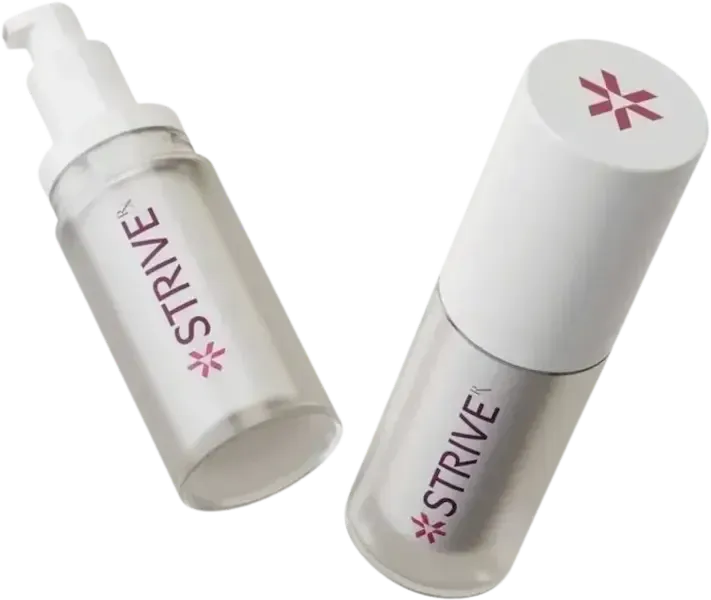
Skincare + Anti-Aging + Dermatology
Glow
A three-active prescription night cream that rebuilds collagen, renews skin, and calms redness with built-in retinoid tolerability.
No Insurance Required
Ships From USA Pharmacy
Free Medical Consultation
No Subscription Required
Licensed Provider
Licensed Pharmacy
HIPAA Compliant
LegitScript Certified
Overview
Estriol / Niacinamide / Tretinoin
Glow combines tretinoin, estriol, and niacinamide in a formula designed for patients new to retinoid therapy, those with sensitive or reactive skin, or anyone managing hormonal aging alongside rosacea-prone reactivity. Niacinamide acts as both an anti-aging active and a tolerability buffer, making consistent nightly tretinoin use achievable for patients who struggle with retinoid-only preparations.
Mechanism of Action
Tretinoin drives collagen synthesis and accelerated epidermal cell turnover via retinoic acid receptor signaling. Estriol restores estrogen receptor activity in keratinocytes and fibroblasts, stimulating hyaluronic acid production, procollagen synthesis, and MMP-1 suppression.
Topical Cream
Applied once nightly to face and neck after cleansing and drying. Start every other night for two weeks, then advance to nightly. Avoid eyes and lip margins. Daily SPF is mandatory. Absolutely contraindicated in pregnancy.
Information presented here is for educational purposes only and not intended to replace or substitute guidance from a healthcare provider. Compounded products are not FDA-approved nor evaluated by the FDA for safety, efficacy, or quality.
Benefits
Skin
Rebuilds collagen, improves firmness, and reduces fine lines through dual-pathway stimulation via tretinoin and estriol.
Reducing Inflammation
Niacinamide suppresses inflammatory cytokines and reduces surface redness, particularly valuable in rosacea-prone or reactive skin.
Healing
Tretinoin accelerates cell turnover to replace photodamaged surface cells while estriol restores estrogen-depleted skin thinning and dryness.
Confidence
A well-tolerated nightly formula that allows consistent retinoid use where other preparations cause too much irritation to stick with.
Complementary
: Serves as an entry point to retinoid therapy or a natural stepping stone toward more comprehensive multi-active formulas like Stella+ GHK.
These statements have not been evaluated by the U.S. Food and Drug Administration and should not be interpreted as medical advice or a guarantee of treatment outcomes.
Simple. Medical. Personalized.

Medical intake
Answer a few online questions about your health history, lifestyle, and goals — no clinic visits required.
Provider evaluation
A licensed medical professional reviews your intake and determines the safest, most effective option for you.

Personalized plan
Custom treatment plan built around your unique health needs, goals, medical history, and biology.

Ongoing support
Stay connected with your care team for follow-ups, adjustments, and expert answers — all online.
All eligibility is reviewed by a licensed medical professional.
What Patients Are Experiencing

"I had tried tretinoin twice before and could not tolerate the irritation. Glow lets me actually use it every night without issues."
— Claire N.*
"My skin has been reactive for years. This is the first prescription formula that improved it without causing a flare."
— Amanda B.*
"Six weeks in my skin tone is more even and the fine lines around my eyes are noticeably softer. Very happy with this."
— Helen W.*
*Individual experiences may vary. Not all patients will have the same outcomes.
FAQs
Does Glow require a prescription?
Yes. Glow contains tretinoin, a prescription-only teratogenic retinoid, and estriol. A valid prescription from a licensed provider is required.
What are the possible side effects?
Tretinoin: mild redness, peeling, and dryness during the initial adjustment period, typically less pronounced than with tretinoin-only formulas due to niacinamide co-formulation. Increased photosensitivity managed by daily SPF. Estriol: rare mild systemic estrogenic effects (breast tenderness) with significant absorption.
Who Should Not use Glow?
Contraindicated in pregnancy and breastfeeding. Patients with hormone-sensitive malignancies including estrogen receptor-positive breast or endometrial cancer require oncologist evaluation. Not for patients with known retinoid or estriol hypersensitivity.
Are there any drug interactions?
Benzoyl peroxide inactivates tretinoin on contact. AHAs and BHAs increase barrier disruption when combined with tretinoin. Patients on systemic menopausal HRT or oral contraceptives should disclose this to their provider given the topical estriol component.
Is Glow safe if I have a pre-existing medical condition?
Patients with hormone-sensitive malignancies require oncologist clearance before using any estriol-containing formula. Patients with active inflammatory skin conditions should wait until the condition is stable before starting tretinoin therapy.
Start Your Journey
Ready to Glow
Without the Irritation?
Physician-prescribed Glow compounded and delivered to your door. No clinic visits required.
Licensed Provider
Licensed Pharmacy
HIPAA Compliant
LegitScript Certified
© 2026, TestosteroneShots.com PC
text (323)-283-9219
638 1/2 N Robertson Blvd, West Hollywood, CA 90069
Legal

The information and products provided on this website are for educational and wellness purposes only and are not intended to diagnose, treat, cure, or prevent any disease. All treatments require evaluation and approval by a licensed healthcare provider through a telemedicine consultation. Individual results may vary, and products carry potential risks and side effects. Certain products may not be evaluated by the U.S. Food and Drug Administration (FDA) unless explicitly stated. Services are provided by licensed physicians and nurse practitioners in states where they are authorized to practice, including California, Florida, Nevada, and other participating states. This service is not intended for medical emergencies. If you are experiencing an emergency, call 911 or seek immediate medical care. We take reasonable measures to protect personal health information in accordance with applicable privacy laws, including HIPAA. By using this website or its services, you agree to our Terms of Service, Privacy Policy, and Telehealth Consent. You must be 18 years of age or older to use this service.


