

Anti-Aging + Peptide Therapy
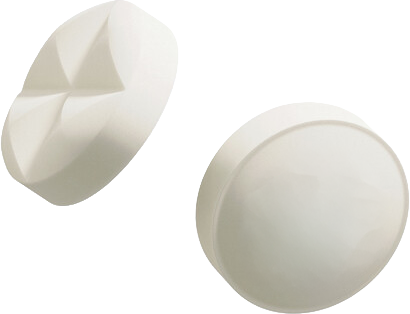
GHK-Cu Troche
A dissolvable oral troche delivering whole-body regenerative support, anti-aging, and tissue repair.
No Insurance Required
Ships From USA Pharmacy
Free Medical Consultation
No Subscription Required
Licensed Provider
Licensed Pharmacy
HIPAA Compliant
LegitScript Certified
Overview
GHK-Cu Acetate
Human tripeptide that declines by more than half between age 20 and 60, paralleling the broader shift toward inflammatory and degenerative gene expression that defines aging. The troche form delivers GHK-Cu through the oral mucosa directly into systemic circulation, bypassing GI degradation, to support tissue repair, immune modulation, collagen synthesis, DNA repair, and gene expression remodeling across multiple organ systems.
Mechanism of Action
GHK-Cu modulates over 4,000 human genes, upregulating repair, collagen synthesis, antioxidant defense, and DNA repair pathways while downregulating inflammation, matrix degradation, and cellular senescence. It activates the ubiquitin-proteasome system to clear damaged proteins, promotes angiogenesis in repairing tissues, suppresses fibrinogen synthesis, and supports mesenchymal stem cell activity.
Oral
Place one troche under the tongue or between the gum and inner cheek. Allow to dissolve fully over 10 20 minutes.
Information presented here is for educational purposes only and not intended to replace or substitute guidance from a healthcare provider. Compounded medications are not FDA-approved nor evaluated by the FDA for safety, efficacy, or quality.
Benefits
Healing
Systemic collagen, glycosaminoglycan, and connective tissue synthesis support throughout the body, including skin, GI mucosa, and blood vessel walls.
Brain Focus and Clarity
Neuroprotective gene expression modulation and support for neuronal survival under oxidative stress.
Immune Function
Modulates inflammatory cytokine signaling and supports immune cell activity through copper-dependent enzymatic and gene regulatory pathways.
Energy
Activates DNA repair pathways and reduces the chronic oxidative and inflammatory burden that drives cellular energy decline in aging tissue.
Individual results may vary. Benefits described are based on clinical and pharmacological evidence and do not constitute a guarantee of treatment outcomes. All treatment requires evaluation and approval by a licensed provider.
Simple. Medical. Personalized.

Medical intake
Answer a few online questions about your health history, lifestyle, & goals. No clinic visits required.
Provider evaluation
A licensed medical provider reviews your intake to determine the safest, personalized treatment.

Personalized plan
Custom treatment plan built around your unique health needs, goals, medical history, & biology.

Ongoing support
Stay connected with your care team for follow-ups, adjustments, & expert answers 100% online.
What Patients Are Experiencing

"I use the troche alongside the topical GHK-Cu. The systemic coverage made a noticeable difference in overall skin quality and recovery from workouts."
— Howard T.*
"My provider added this to my longevity protocol. Recovery, sleep quality, and skin texture all improved within the first two months."
— Richard N.*
"The convenience of a troche versus an injection is significant. The results have been comparable to what I experienced with subcutaneous GHK-Cu."
— Philip K.*
*Individual experiences may vary. Not all patients will have the same outcomes.
FAQs
What is GHK-CU Troche?
GHK-CU Troche is a prescription therapy used for skin and wellness support.
Who should use GHK-CU Troche?
Patients seeking support for skin and wellness support may qualify after evaluation by a licensed provider.
Does GHK-Cu Troche require a prescription?
Yes. GHK-Cu Troche is a compounded prescription preparation requiring a valid prescription from a licensed healthcare provider. A telehealth consultation and medical intake are required before dispensing to confirm clinical suitability and establish the appropriate dosing protocol.
What are the possible side effects?
GHK-Cu has a well-established safety profile based on its natural occurrence in human physiology. Troche-specific side effects are generally mild and may include: transient blue discoloration of saliva or oral mucosa during dissolution (normal and harmless — the copper complex color), mild oral sensitivity or transient irritation at the dissolution site during initial use, and occasional mild nausea or infrequent headache. Serious adverse effects have not been documented at therapeutic doses. Discontinue and contact your provider if you experience persistent oral irritation, swelling of the mouth or throat, or signs of a systemic allergic reaction.
Who Should Not Use GHK-Cu Troche?
Patients with Wilson's disease or copper metabolism disorders must not use this preparation without specialist supervision and close monitoring of copper status. Patients with active malignancy require oncology consultation and individualized risk-benefit assessment before initiating therapy. Safety during pregnancy and breastfeeding has not been established — use is not recommended. Pediatric use has not been studied. Patients with a history of any malignancy should discuss use with their provider.
Are there any drug interactions?
Copper-chelating agents (D-penicillamine, trientine) will directly antagonize the copper component of GHK-Cu — concurrent use is contraindicated without specialist guidance. High-dose antioxidant supplementation may theoretically interact with copper-mediated redox activity. Patients on systemic immunosuppressive therapy require individualized evaluation due to GHK-Cu's immune gene-modulating activity. Provide a complete medication list before beginning treatment.
Is GHK-Cu Troche safe if I have a pre-existing medical condition?
Patients with Wilson's disease or any copper metabolism disorder require specialist assessment before using any systemic copper-containing preparation. Those with a history of any malignancy should have their provider and oncologist review the appropriateness of GHK-Cu therapy. Patients with significant cardiovascular, hepatic, or renal disease require individualized evaluation. Your provider will determine appropriateness based on your complete medical history.
Contact Us
Start Your Journey
Ready to Support Regeneration
at the Systemic Level?
Physician-prescribed. Pharmacy ships to your door.
No clinic visits required.
Licensed Provider
Licensed Pharmacy
HIPAA Compliant
LegitScript Certified

© 2026 TestosteroneShots.com, PC
text (323)-283-9219
638 1/2 N. Robertson Blvd, West Hollywood, CA 90069
Legal

The information and clinical services described on this website are for educational and informational purposes only and are not intended to diagnose, treat, cure, or prevent any disease. All treatments require evaluation and approval by a licensed healthcare provider through a telemedicine consultation. Treatment approval is not guaranteed. Individual results may vary, and treatments may carry risks and side effects. Certain compounded medications, wellness treatments, or off-label uses may not be evaluated by the U.S. Food and Drug Administration (FDA) for safety, effectiveness, or quality unless explicitly stated. Testosterone Shots provides telehealth consultations, clinical review, care coordination, lab-related services, membership services, and ongoing treatment management. Testosterone Shots is not a pharmacy and does not manufacture, compound, dispense, sell, handle, warehouse, ship, or collect payment for prescription medication. Testosterone Shots collects payment only for consultations, clinical review, care coordination, lab-related services, membership services, and other non-pharmacy services. If treatment is approved, your prescription may be sent to a licensed pharmacy partner. The pharmacy contacts you directly to complete medication payment and shipping. Services are provided by licensed physicians, nurse practitioners, and/or other licensed healthcare providers in states where they are authorized to practice. This service is not intended for medical emergencies. If you are experiencing an emergency, call 911 or seek immediate medical care. We take reasonable measures to protect personal health information in accordance with applicable privacy laws, including HIPAA. By using this website or its services, you agree to our Terms of Service, Privacy Policy, Notice of Privacy Practices, Telehealth Consent, and Important Safety Information. You must be 18 years of age or older to use this service.